Tuesday, August 11, 2009
Changes we saw
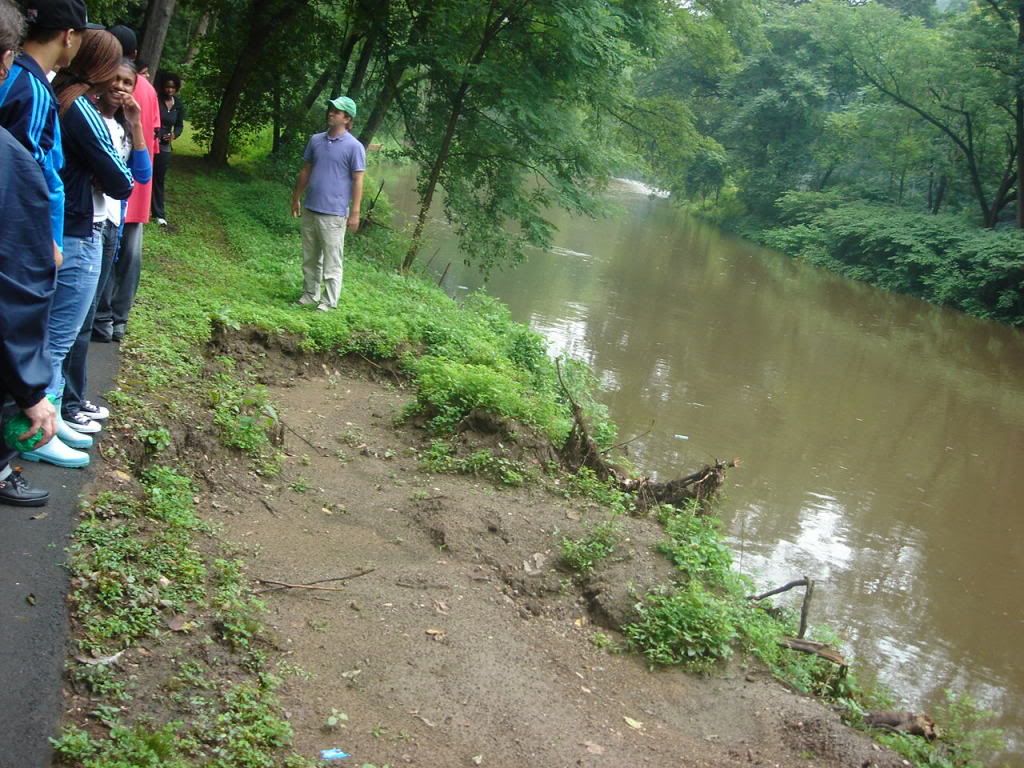
On my trip to I've saw mutilpel changes in the area such as dirt patches the was at one point veagtation strong trees broken and dead also three feet deep river now fou r feet deep theses changes are casue by many thing mainly storms the runoff from the rain can casue elavation in the river. Once the river elavated to surface level of the land peices of land brakes off falling in the water cause what we know as erosion .the broken trees and be cause by beavers or lighting strikes and to small thin weak trees harsh winds can brak them and kill them . And those are the changes of of park .


tuesday
Today :
We are editing and adding things to our blogs that we made. We are posting past work we have did and also posting our perspecive on futurte activities we will be doing .and giving our input on the progam me personally i feel this progam is too much like school then a job only difference3s in my opinion is that we get paid for it. I feel the exceptation of the progam from everone here was undermind over all it was a great experience and I would not trade it for nothing least.
We are editing and adding things to our blogs that we made. We are posting past work we have did and also posting our perspecive on futurte activities we will be doing .and giving our input on the progam me personally i feel this progam is too much like school then a job only difference3s in my opinion is that we get paid for it. I feel the exceptation of the progam from everone here was undermind over all it was a great experience and I would not trade it for nothing least.
Monday, August 10, 2009


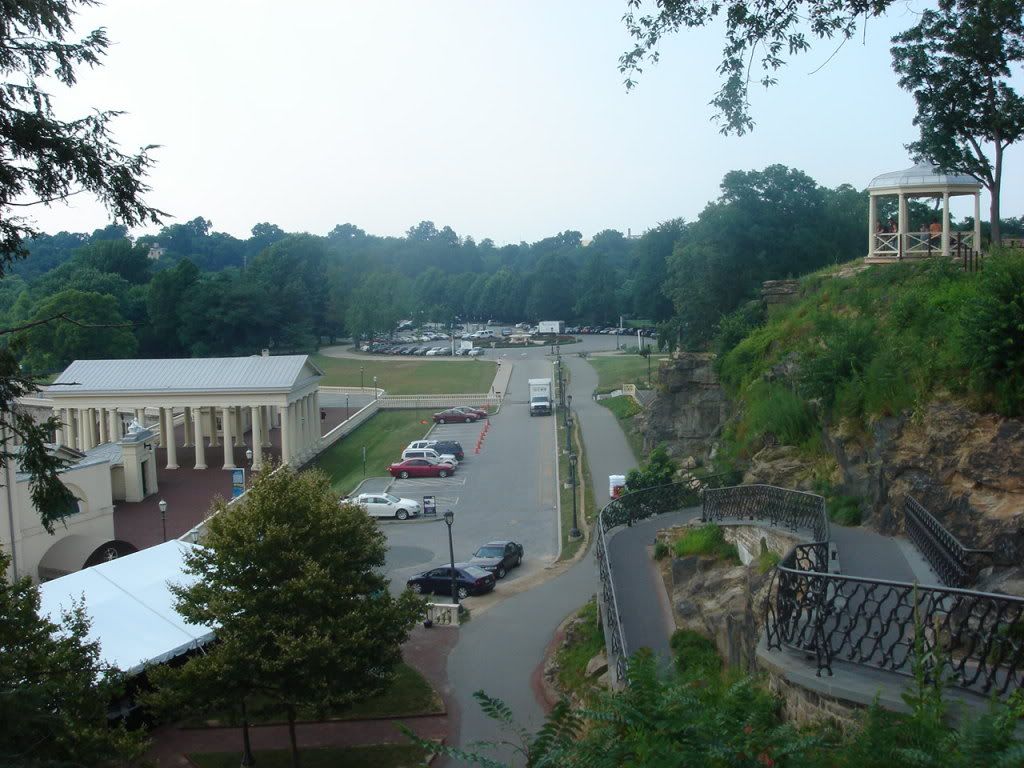
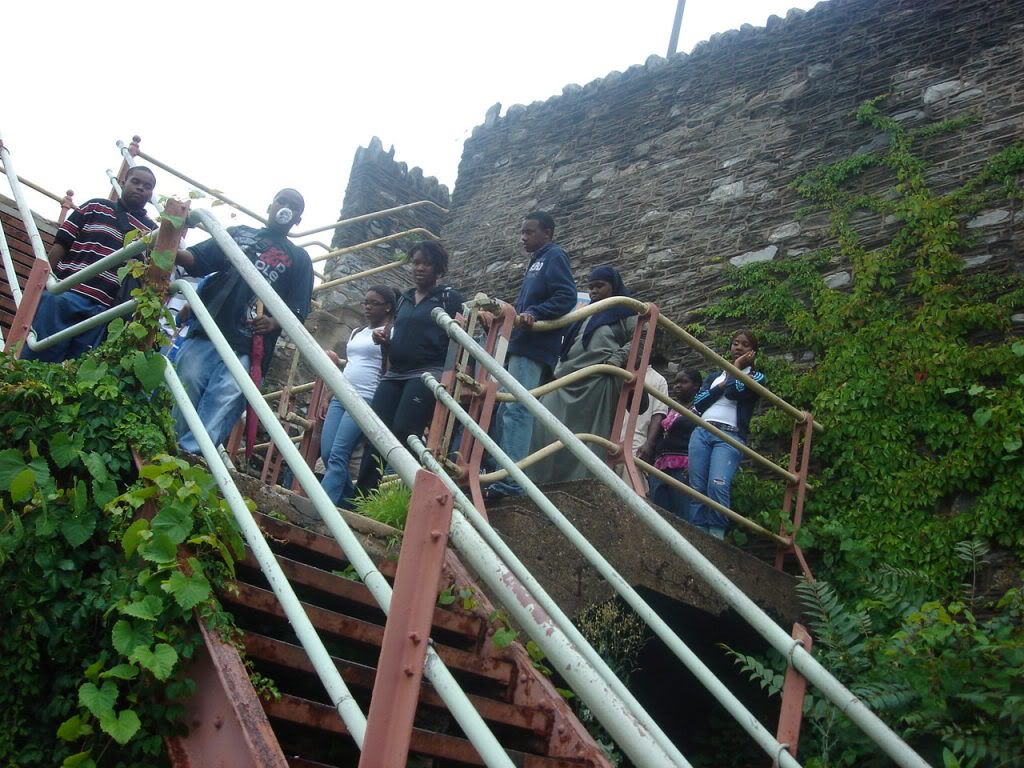
the history we found in the Temple area!!!
It was hot but worthwhile. Yesterday we walked around North Philly and looked at four important landmarks: The Church of the Advocate, The Opportunities Industrialization Center (OIC), Jessie Redmon Fauset's Philadelphia Home, and the Universal Negro Improvement Association. Some information about each landmark is listed below.
The Church Of The Advocate was the first Episcopal Church in the world to ordain women. It was built as a memorial for civil rights leader George W. South. It was the site of several significant events of the Civil Rights movement, including the National Conference of Black Power (1968), the Black Panther Conference (1970), and the first ordination of women in the Episcopal Church (1974).
OIC, or OICA (OIC of America), was founded by Reverend Doctor Leon H. Sullivan. It is a national non-profit organization focused on helping poor and unemployed citizens realize their true potential through employment and training centers. The first OIC training center was located in an abandoned jailhouse in North Philadelphia, which was later renovated thanks to generous donations from the community and anonymous contributors.
Jessie Redmon Fauset went to Philadephia High School for Girls and graduated as the only African-American in her class. After graduating from Cornell University, Fauset went to work for the NAACP's journal The Crisis, as the literary editor under W.E.B. DuBois. At the end of her editing career, 58 of her 77 published works appeared first in The Crisis. Eventually Fauset came back to Philadelphia and lived out the rest of her life here until she died from a heart attack in 1961.
Marcus Garvey, founder of the UNIA, was born in St. Ann's Bay, Jamaica on August 17, 1887. He founded the first UNIA in Jamaica in 1911, and the first branch in the United States in New York 1917. He believed that all races should live in their native countries. (Asians live in Asia, Africans live in Africa, and so on.)
The Church Of The Advocate was the first Episcopal Church in the world to ordain women. It was built as a memorial for civil rights leader George W. South. It was the site of several significant events of the Civil Rights movement, including the National Conference of Black Power (1968), the Black Panther Conference (1970), and the first ordination of women in the Episcopal Church (1974).
OIC, or OICA (OIC of America), was founded by Reverend Doctor Leon H. Sullivan. It is a national non-profit organization focused on helping poor and unemployed citizens realize their true potential through employment and training centers. The first OIC training center was located in an abandoned jailhouse in North Philadelphia, which was later renovated thanks to generous donations from the community and anonymous contributors.

Jessie Redmon Fauset went to Philadephia High School for Girls and graduated as the only African-American in her class. After graduating from Cornell University, Fauset went to work for the NAACP's journal The Crisis, as the literary editor under W.E.B. DuBois. At the end of her editing career, 58 of her 77 published works appeared first in The Crisis. Eventually Fauset came back to Philadelphia and lived out the rest of her life here until she died from a heart attack in 1961.
Marcus Garvey, founder of the UNIA, was born in St. Ann's Bay, Jamaica on August 17, 1887. He founded the first UNIA in Jamaica in 1911, and the first branch in the United States in New York 1917. He believed that all races should live in their native countries. (Asians live in Asia, Africans live in Africa, and so on.)

the wordl of google earth
With google earth we can view cities, countries and states from a bird's eye view.This is important because we can view areas we never visted and get an idea of how people live which can be very interesting. We can also compare the images from Google Earth with current photos of a specific area to see how that area has change over a period of time.
Our best week for me
Monday: Preparing for the TripOn Monday we worked on our group blog as well as our houses in Google Sketchup. The designs of our houses are coming along very nicely. Soon they'll be looking pretty fly. We also went in the building for liberal arts with Lamessa to learn about what we'll be doing tomorrow. He told us that as we walk through the park to study our surroundings and see the different type of geography there is.
Tuesday: Wissahickon Park, Day OneTuesday was the first day that we went to the Wissahickon Park and it was pretty fun. Kevin (our guide from Friends Of The Wissahickon) came and led us down the path of the park that ran along Lincoln Drive. We walked all the way down until we got to Forbidden Drive and turned around to head back. Once we stopped at the Drive (Forbidden) we learned about the Ten Box Shelter. It used to be a stop for travellers walking along the park's trails. Built in 1940, by the Works Progress Administration (WPA), this shelter served as a guard station also providing travellers with restrooms and concession stands. Ten Box got its name a long time ago as well. Park guards used to use a telephone line that ran along Forbidden Drive. The line consisted of ten locked phone boxes, with the tenth one being at this shelter. The line is gone, but the name "Ten Box" still exists for this local landmark.
Wednesday: When the Levees BrokeOn Wednesday we watched the movie When The Levees Broke, a movie directed by Spike Lee. The movie was a documentary on the experiences of New Orleans natives before, during, and after Hurricane Katrina. It was a very emotional movie, not to mention very long. We didn't even finish half of the movie and we watched it for about 2 hours! After watching a portion of the movie, Laura told us about a group of kids in Brooklyn who created a website and a game about a girl during the storm trying to find her mother, called Tempest In Crescent City. We found it to be a pretty fun game, not to mention informational. Through every level it gave tidbits of information of what was happening during the week of the storm. If you want to learn more about theses kids from Brooklyn, their cause, or even play their game, then click here to go to their website: http://tempestincrescentcity.ning.com/
Thursday: Wissahickon Park, Day TwoOn Thursday, Day Two of our Wissachickon trip, we went the direction opposite from the trail we took on Tuesday. We went up along Kelly Drive until we got to the East Falls Bridge, and then turned around to head back. Because this part of the park isn't a forest like the path along Lincoln Drive, there was barely any erosion along this path, fortunately. Erosion is the condition in which the Earth's surface is worn away by water and wind. Erosion wears away the ground and soil, killing the vegetation surrounding it. One job of the Friends Of The Wissahickon is to reduce the amount of erosion that happens in the park.
Friday: Chill Time Today we just relaxed in the computer room. With the eventful week that we had, is was good to be able to rest for once!
Tuesday: Wissahickon Park, Day OneTuesday was the first day that we went to the Wissahickon Park and it was pretty fun. Kevin (our guide from Friends Of The Wissahickon) came and led us down the path of the park that ran along Lincoln Drive. We walked all the way down until we got to Forbidden Drive and turned around to head back. Once we stopped at the Drive (Forbidden) we learned about the Ten Box Shelter. It used to be a stop for travellers walking along the park's trails. Built in 1940, by the Works Progress Administration (WPA), this shelter served as a guard station also providing travellers with restrooms and concession stands. Ten Box got its name a long time ago as well. Park guards used to use a telephone line that ran along Forbidden Drive. The line consisted of ten locked phone boxes, with the tenth one being at this shelter. The line is gone, but the name "Ten Box" still exists for this local landmark.
Wednesday: When the Levees BrokeOn Wednesday we watched the movie When The Levees Broke, a movie directed by Spike Lee. The movie was a documentary on the experiences of New Orleans natives before, during, and after Hurricane Katrina. It was a very emotional movie, not to mention very long. We didn't even finish half of the movie and we watched it for about 2 hours! After watching a portion of the movie, Laura told us about a group of kids in Brooklyn who created a website and a game about a girl during the storm trying to find her mother, called Tempest In Crescent City. We found it to be a pretty fun game, not to mention informational. Through every level it gave tidbits of information of what was happening during the week of the storm. If you want to learn more about theses kids from Brooklyn, their cause, or even play their game, then click here to go to their website: http://tempestincrescentcity.ning.com/
Thursday: Wissahickon Park, Day TwoOn Thursday, Day Two of our Wissachickon trip, we went the direction opposite from the trail we took on Tuesday. We went up along Kelly Drive until we got to the East Falls Bridge, and then turned around to head back. Because this part of the park isn't a forest like the path along Lincoln Drive, there was barely any erosion along this path, fortunately. Erosion is the condition in which the Earth's surface is worn away by water and wind. Erosion wears away the ground and soil, killing the vegetation surrounding it. One job of the Friends Of The Wissahickon is to reduce the amount of erosion that happens in the park.
Friday: Chill Time Today we just relaxed in the computer room. With the eventful week that we had, is was good to be able to rest for once!
t\The warriors input on the Schuykill River
While walking thought the park yesterday we learned about the five different species of fish that live in the water.The five were the American Shade, Channel Catfish, Yellow Perch, Small-Mouth Bass, and the Common Carp. The American Shade has a lower jaw with pointed tips that is V-shaped in the upper jaw. It has greenish blue scales with silvery sides.The Channel Catfish is the greatest populated species of catfish. The easiest methods of capturing this type of fish are using Crickets, Shads, Frogs, Crawfish as bait. Its upper jaw projects farther out beyond the lower jaw. The Yellow Perch is pale and has yellowish scales. Its lifespan is up to 11 years and reaches sexual maturity at 1 to 3 years of age for males and 2 to 3 years of age for females. The Small-Mouth Bass have greenish scales with dark vertical bands on their sides. The Common Carp is a heavy-bodied minnow with barbels on both side of the upper jaw. It has a lifespan of over 47 years and can weigh up to 75 pounds.
The warriors post on wissahickon park
Yesterday was EXTREMELY hot. It probably wasn't the best day to go because of the heat, but we did anyway. Instead of walking along the bike path we went up the Lincoln Drive trail through the forest. It was rocky, muddy, it had A LOT of worms along the ground and it was very uneven, just like the conditions of any trail in a park. There weren't that many signs along the trail; in the beginning when we started on the trail the sign for the trail said it's help locator was the number "100". Along the way we came across a sign describing the "Hermit's Cave", a sign for a memorial that said "Wishin' I Was Fishin'", as well as various marks on trees that showed the specific path we were on. (Green and yellow rectangles). The landmarks that we saw - the Hermit's Cave, the memorial, Lover's Leap, the Golf Course, and the bridge above Lincoln Drive - were all very interesting to learn about. The cave in particular was very intriguing; it was built by a man named Johannes Kelpius who believed the world would soon come to an end. He built this cave as a shelter to protect himself from this alleged "Judgement Day".One thing that could have improved the trails would be more signage. The trail branched off into many paths, making it confusing to know exactly where you are and possibly how to get back. If there was more signage up in the forest, it would be a little easier to navigate through the woods. Another way to improve the trails is to add trash receptacles. Walking along the trail, we found no trash cans along the way. Carrying trash for a long period of time can be very annoying, which can cause people to litter. If there were trash cans strategically placed throughout the trails, people would be less likely to litter, keeping the forest clean.
Subscribe to:
Comments (Atom)